The loss of Tamil civilians during the war is devastating. Thousands were killed, and many others simply disappeared, taken without a trace. Amnesty International estimated in 2017 that between 60,000 and 100,000 people have gone missing in Sri Lanka since the late 1980s.
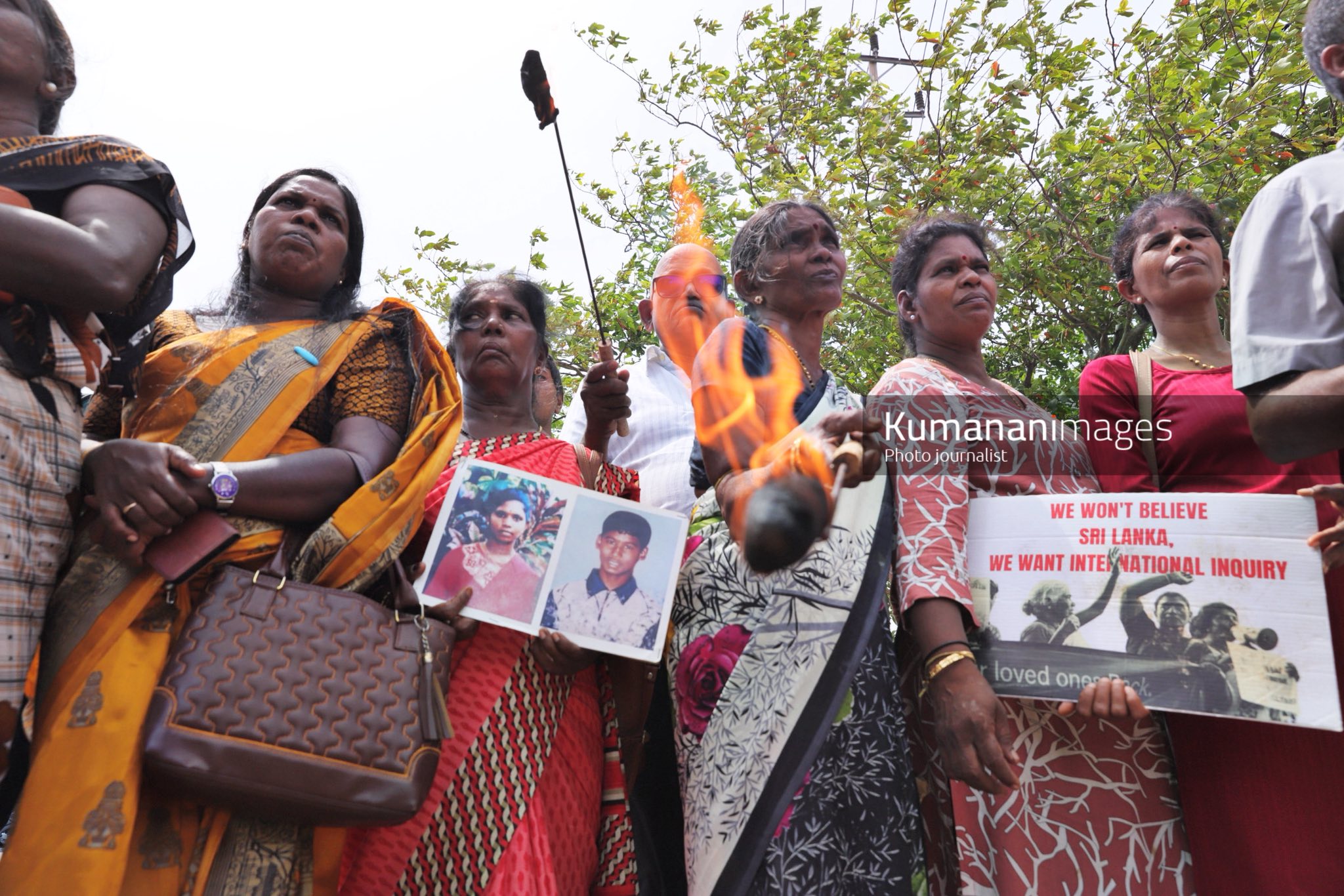
For three decades, mothers have stood under a sky that never offered shade, demanding answers. They ask where their sons are. Their daughters. Their brothers. Their husbands. Those who were taken without warning, often without reason. The state has answered with silence.
But sometimes, the earth itself begins to speak.
In 1998, a Sri Lankan soldier testified in court that 300 to 400 people were buried in Chemmani, outside Jaffna town, near Nallur. A year later, 15 human skeletons were uncovered at the site. Then everything went quiet.
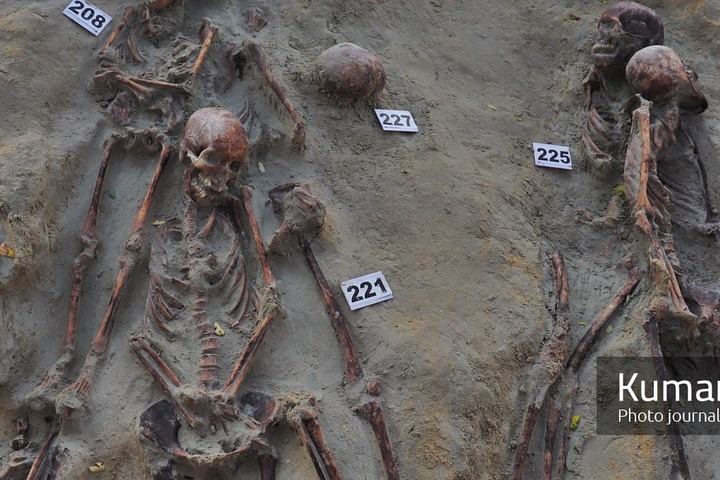
In 2025, the buried story began to surface once more. During the construction of a crematorium in Chemmani, human remains were discovered. Within months, more than 240 skeletons were recovered. Among them were children and infants. Some were found with a schoolbag, a baby bottle, and fragments of clothing. They were bound, their skulls broken, buried in shallow earth with no markers and no names.
These are not abstract numbers. Each skeleton belonged to someone who was loved. Someone who never came home.
I think about my grandmother. She carried the war in her body long after the bombs stopped. Her son, my uncle, was taken because he was young and Tamil. He never came home. I grew up with that story whispered again and again, not because she enjoyed telling it, but because forgetting was not an option.
In the early 1990s, my father’s elder brother was taken from his shop by soldiers. He never returned. There was no body, no grave, no answers. Like so many others, he simply vanished, another name swallowed by the war.
When I read about the graves in Chemmani, I think about how both my grandmothers waited for answers that never came. How so many mothers have spent decades searching, begging, standing in front of state buildings, holding photographs that never age.
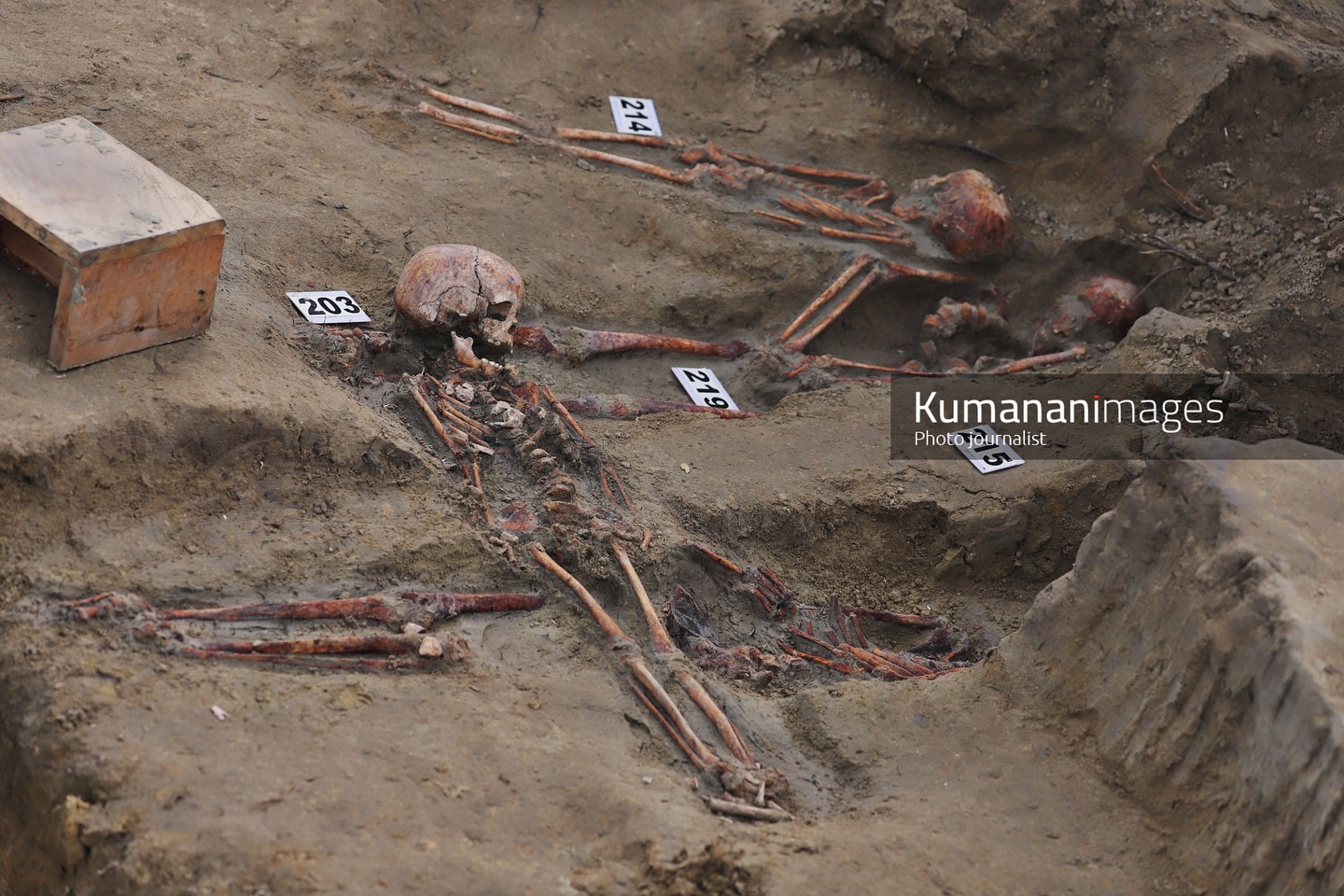
The truth in Chemmani is about the people who disappeared and those who never stopped searching for them.
This time, the surviving families are not only asking for another report. They are demanding a real investigation, one that the Sri Lankan government cannot control or bury. People are calling for international experts, for the evidence to be protected, and for families to be included.
The government’s response so far has been cautious, limited, and painfully familiar. Excavations continue under court supervision, but no one has been held responsible. There is no clear plan for identifying the remains or prosecuting those who carried out the killings. Resources are limited, international help is blocked, and the state is doing nothing while time passes.
But time cannot erase this. Each body found is proof of what was denied for decades.
Chemmani is not just a piece of land in Jaffna. It is a wound that keeps reopening. A graveyard the state hoped to bury not just bodies in but history itself. It must not be covered up again.
All images courtesy of journalist and photographer Kumanan https://kumananimages.com/