Forty-two years ago this week, Colombo’s streets erupted in the organised anti-Tamil pogrom we know as Black July 1983. For seven days, state-abetted mobs burned homes and businesses, stripped men naked before lynching them, and left as many as 5,000 Tamils dead and 150,000 homeless. The violence was not an aberration; it was the opening chapter of a genocide that would grind on for decades.
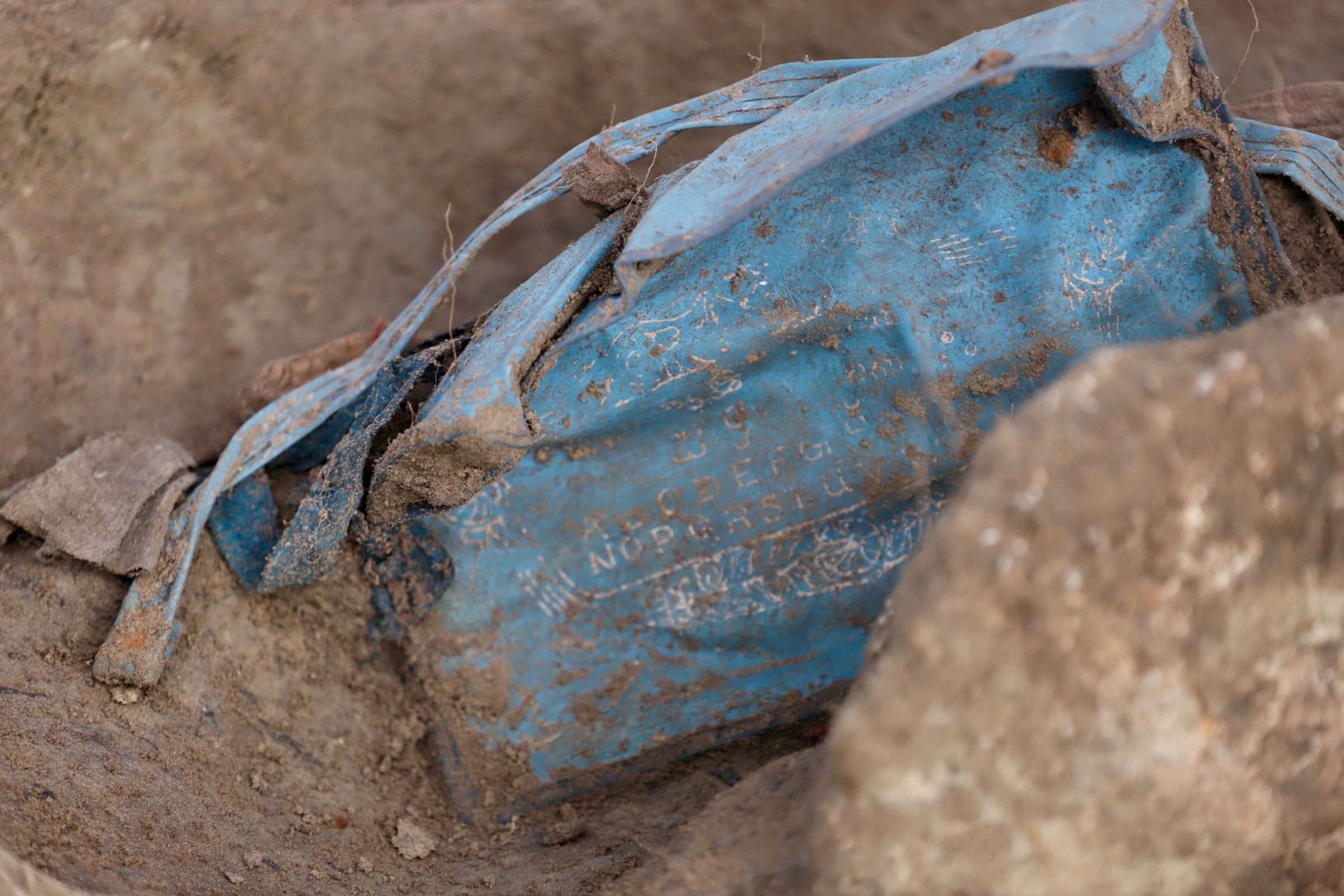
Last month, bulldozers widening a road in Chemmani, Jaffna sliced into that history. Forensic teams have already recovered the remains of at least 85 people—some of them children—from a previously unmarked mass grave, with more skeletons emerging almost daily. Even the UN High Commissioner for Human Rights visited the site, calling it fresh evidence of “systemic impunity.” Chemmani is not an isolated horror; it is a milepost on the same bloody road that began well before July 1983 and continued through Welikada, Mullivaikkal, and scores of other killing fields. Sixteen years after the war’s official end—and forty-two after Black July—no senior commander has been convicted under either Sri Lankan or international law.
Canada’s Record: Principled Words, Patchy Results
Successive Canadian governments have not been indifferent. Ottawa opened its doors to thousands of Tamil refugees fleeing the 1980s violence and, in 2013, Prime Minister Stephen Harper boycotted the Commonwealth summit in Colombo, branding Sri Lanka’s rights record “evil.” Canada co-sponsored the watershed 2014 UN Human Rights Council resolution mandating an international inquiry into wartime atrocities, and in 2021 welcomed a tougher follow-up resolution that urged member states to pursue judicial accountability.
Parliament has spoken, too. In May 2022 the House of Commons unanimously declared May 18 “Tamil Genocide Remembrance Day,” formally acknowledging that a genocide occurred. Since then, Canada publicly reaffirmed its commitment on Tamil Genocide Remembrance Day, with former Prime Minister Trudeau and now Prime Minister Mark Carney emphasizing support for “independent international efforts to seek accountability and push for truth and justice. Across the opposition bench, voices like Conservative leader Pierre Poilievre and the NDP have spoken in strong terms, demanding prosecutions in international courts. Such declarations signal moral clarity and more importantly, they frame Black July not as historical footnote but as an atrocity demanding redress.
Yet when it comes to concrete action—sanctions, legal accountability, robust international advocacy—Canada’s record is uneven.
In 2011–2012, Canada publicly welcomed Sri Lanka’s Lessons Learnt and Reconciliation Commission (LLRC). It pressed for implementation of its recommendations and for an independent investigation. But the LLRC itself was widely criticized for failing to meet international standards and effectively shielding war crimes. Canada’s response, though vocal, stopped short of spearheading tougher measures like sanctions or UN referrals at that time.
Only in 2023 did Canada finally impose Magnitsky-style sanctions and asset freezes on Sri Lankan officials “credibly implicated” in war-crimes—updating the list again in February 2025. This step, while welcome, comes decades after initial commitments, leading many to question why it took so long. Complicating matters further, Canada’s own Federal Court in mid‑2024 parsed the legal status of Trudeau’s statements, ruling they did not equate to a binding recognition of genocide. These legal ambiguities dilute the impact of Canada’s words, making true international pressure harder to sustain.
These are meaningful steps, yet Chemmani proves they are not enough. Sri Lanka still refuses to cooperate with UN investigators; alleged perpetrators occupy senior military, political and diplomatic posts; and the families of the disappeared dig through rubble for fragments of bone.
Where Do We Go From Here?
As previously noted, Canada has already taken modest steps toward accountability but Ottawa must go much further.
In particular, Canada should systematically broaden its sanctions roster to include all military commanders named in UN human‑rights reports and transparently publish the criteria guiding those designations. At the same time, the RCMP’s War Crimes Program ought to be properly resourced to initiate universal jurisdiction investigations into alleged genocide and crimes against humanity committed in Sri Lanka, especially when survivors and witnesses now reside on Canadian soil. Other countries, especially those with strong Tamil diaspora constituencies, have already demonstrated leadership in this area. Switzerland has one of the most robust systems for universal jurisdiction. It has investigated and arrested Sri Lankan officials suspected of crimes committed during the civil war, including under command responsibility. Sri Lankan military figures residing or visiting have been subject to legal scrutiny—sending a strong deterrent message. Similarly, Germany has pursued high-profile trials under universal jurisdiction for crimes committed in Syria demonstrating that such legal action is feasible for Sri Lanka. While it hasn’t yet prosecuted Sri Lankan officials, Germany’s legal framework allows Tamil victims to initiate action. Canada could follow Germany’s model by empowering Tamil victims to trigger war crimes cases domestically or via international partners.
Canadian Tamil advocates haven’t waited for government action. For example, Tamil Rights Group has been active at the UN Human Rights Council since 2022 in pushing for referral of Sri Lanka to the International Criminal Court and universal jurisdiction prosecutions. In early 2024, they directly presented recommendations to Canadian foreign affairs committees, advocating for expansion of universal jurisdiction laws. Meanwhile, PEARL (People for Equality and Relief in Lanka) continues to gather affidavits, satellite imagery, and forensic data to build war‑crimes cases and drive UN referrals, laying vital groundwork for future prosecutions.
Beyond unilateral measures, Parliament should press the government to champion a formal referral of Sri Lanka’s impunity to the International Criminal Court or to back the establishment of a hybrid tribunal, drawing on Canada’s historic leadership in resolving the injustices of apartheid South Africa and the Rwandan genocide. Any bilateral cooperation—be it military training exchanges, trade agreements, or export permits—must be explicitly conditioned on Colombo’s demonstrable, good‑faith cooperation with UN investigative mechanisms and prosecutors.
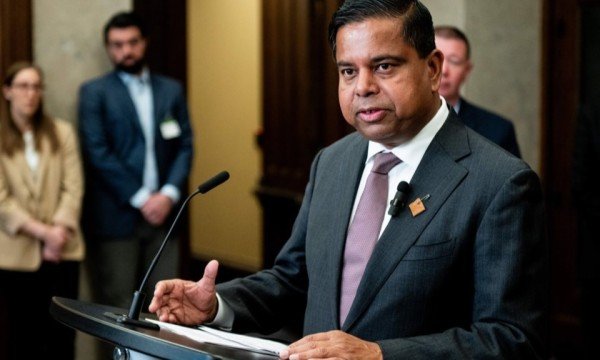
Equally urgent is a recalibration of Canadian newsrooms’ editorial priorities. It is grotesque that while Global News dedicates multiple investigations to procedural questions about Public Safety Minister Gary Anandasangaree, Canada’s first federal Crown minister of Sri Lankan Tamil heritage, it and other mainstream outlets have largely ignored the unfolding horror in Chemmani. The asymmetry is stark: a Tamil Canadian minister defending administrative safeguards is headline material while dozens of Tamil bodies hauled from a shallow grave, which has shocked hundreds of thousands of Tamil Canadians, are apparently not. Such a lopsided focus reveals a profound lapse in journalistic responsibility that undermines public awareness and, ultimately, political pressure for justice.
This moment should also prompt a broader reckoning with Canada’s chronic reluctance on the world stage. As Amanda Ghahremani and Alex Neve recently observed in The Globe and Mail, Ottawa has twice in recent weeks refused to join other states in publicly endorsing the International Criminal Court—a stunning retreat from the very principles of international law that Canada claims to uphold especially at an opportune time in which President Donald Trump is pulling the United States out of international forums. If Canada is to live up to its professed values, it cannot remain on the sidelines of justice while graves keep opening.
A Call to Memory—and to Action
Black July was never merely a Sri Lankan tragedy; it reshaped Canada, too, propelling tens of thousands of Tamils onto our shores and into our neighbourhoods. Chemmani reminds us that the graves are still open, the families still waiting, and the promise of “Never Again” still unkept.
On this 42nd anniversary, Canada can either treat justice as a talking point or make it a foreign-policy priority. Tamils in Jaffna are sifting red earth for their children’s bones. Tamils in Toronto, Markham, Brampton, Montreal, and elsewhere from coat-to-coast-coast are watching, and counting who shows up—governments, journalists, and citizens alike. The choice, and the moral ledger, are ours.
Kumaran Nadesan is the Founding Chair of comdu.it, a diaspora-led international development organisation that has led sustainable development interventions to support war-impacted and under-represented communities throughout Sri Lanka, and especially in the traditional Tamil homelands.