JYXDI—the Instagram handle of Toronto-based artist Jyothee Murali—has built a thriving art business by blending cultural identity, consistent creativity, and savvy use of social media. At 29, she creates everything from paintings of Hindu gods and anime characters to viral reels in saris—redefining how art can connect and sell in the digital age. With over 250K followers, workshops across Sri Lanka, and a first home purchased at 23, her journey proves that when passion meets strategy, it can go global.
What’s something about being a popular artist on Instagram that most people wouldn’t expect or understand?
One of the hardest parts has been keeping up with posting. A lot of people don’t realize how demanding the algorithm is — like, ideally, you're supposed to post every day to stay relevant. For artists, that’s really tough. It’s not like I’m posting memes or quick selfies; it takes time to create a full piece.
At one point, I settled into posting every two days, which is still a lot. I can’t always finish a new artwork that fast, so I started getting creative — making different kinds of videos using art I’ve already made.
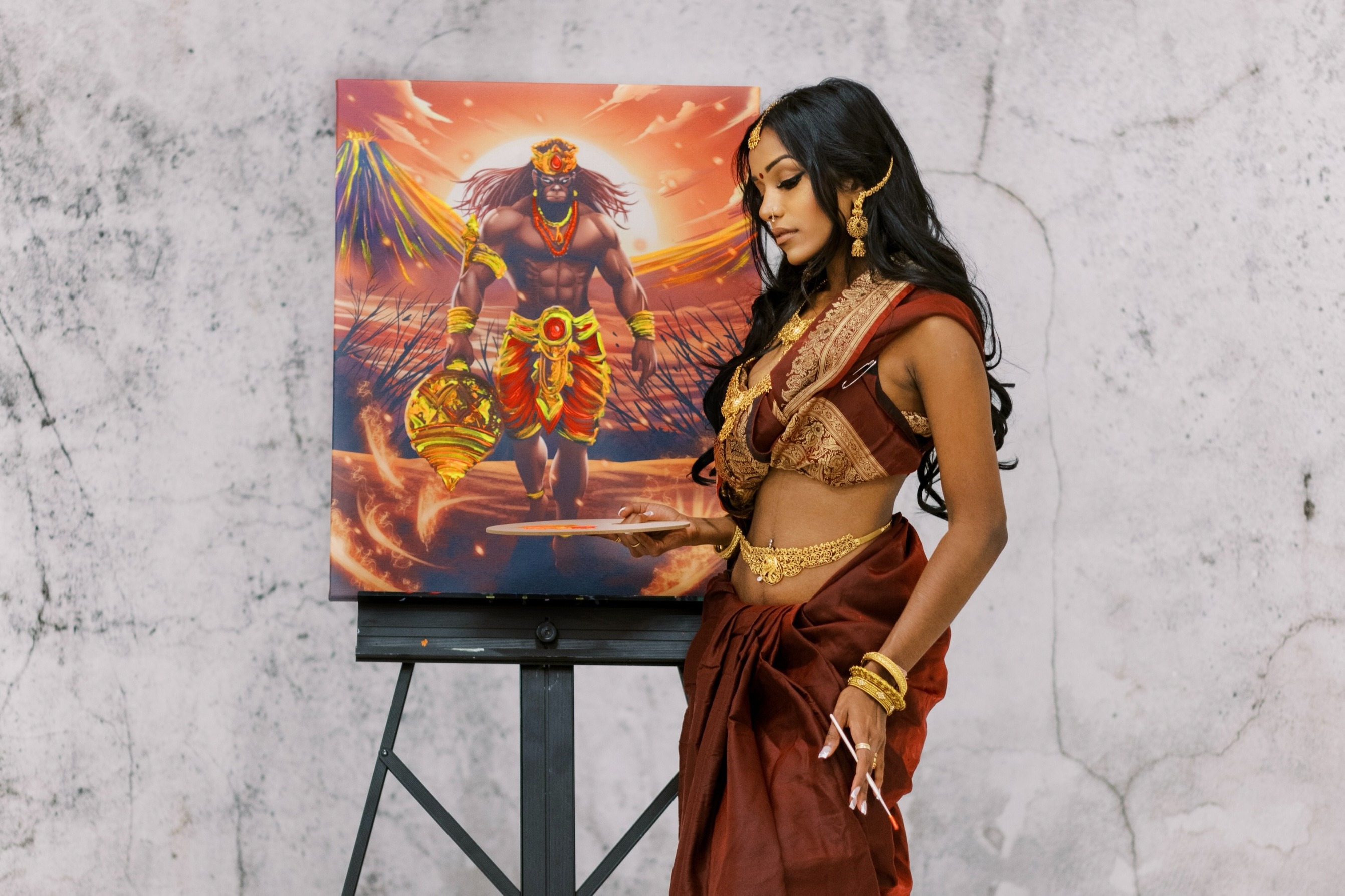
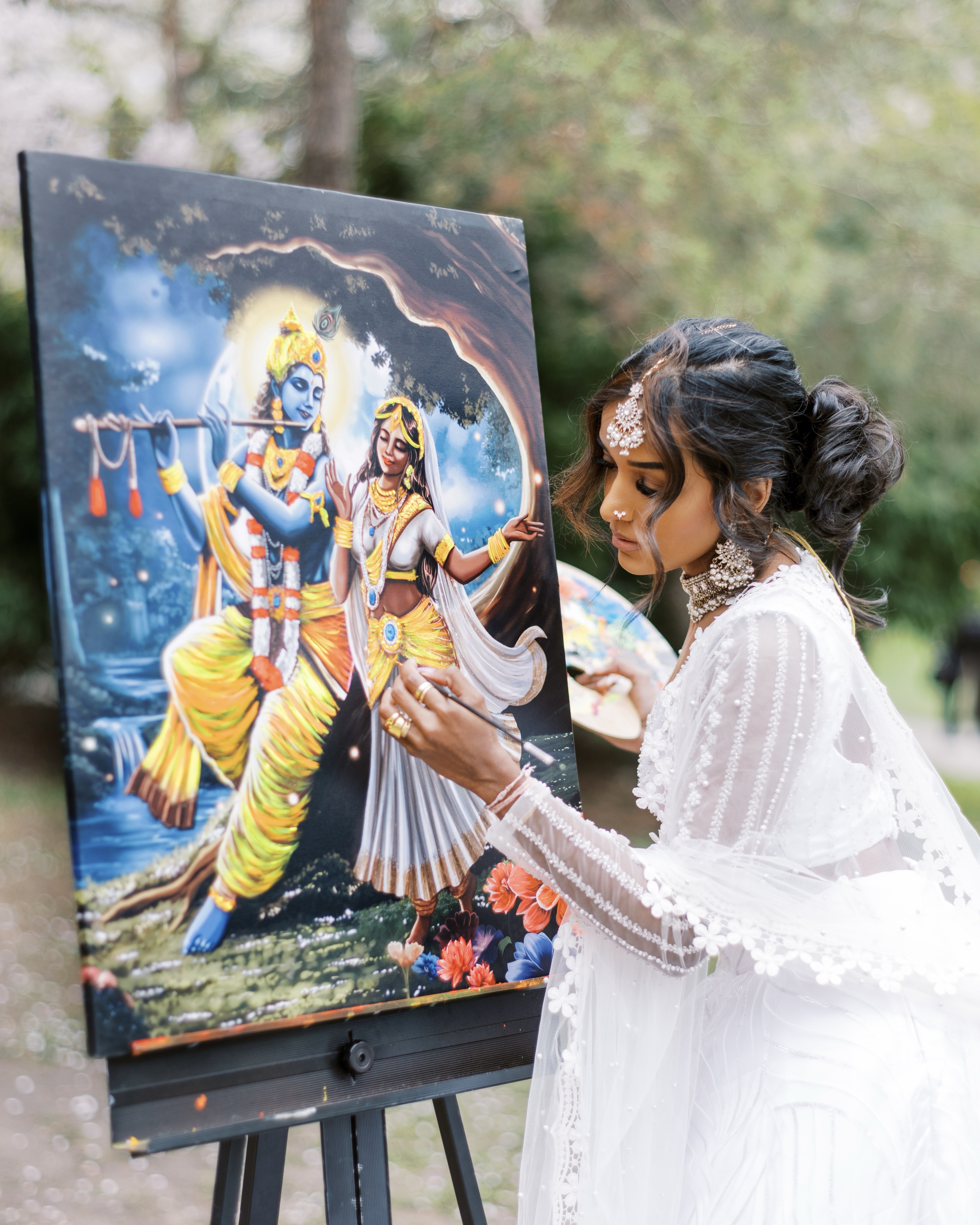
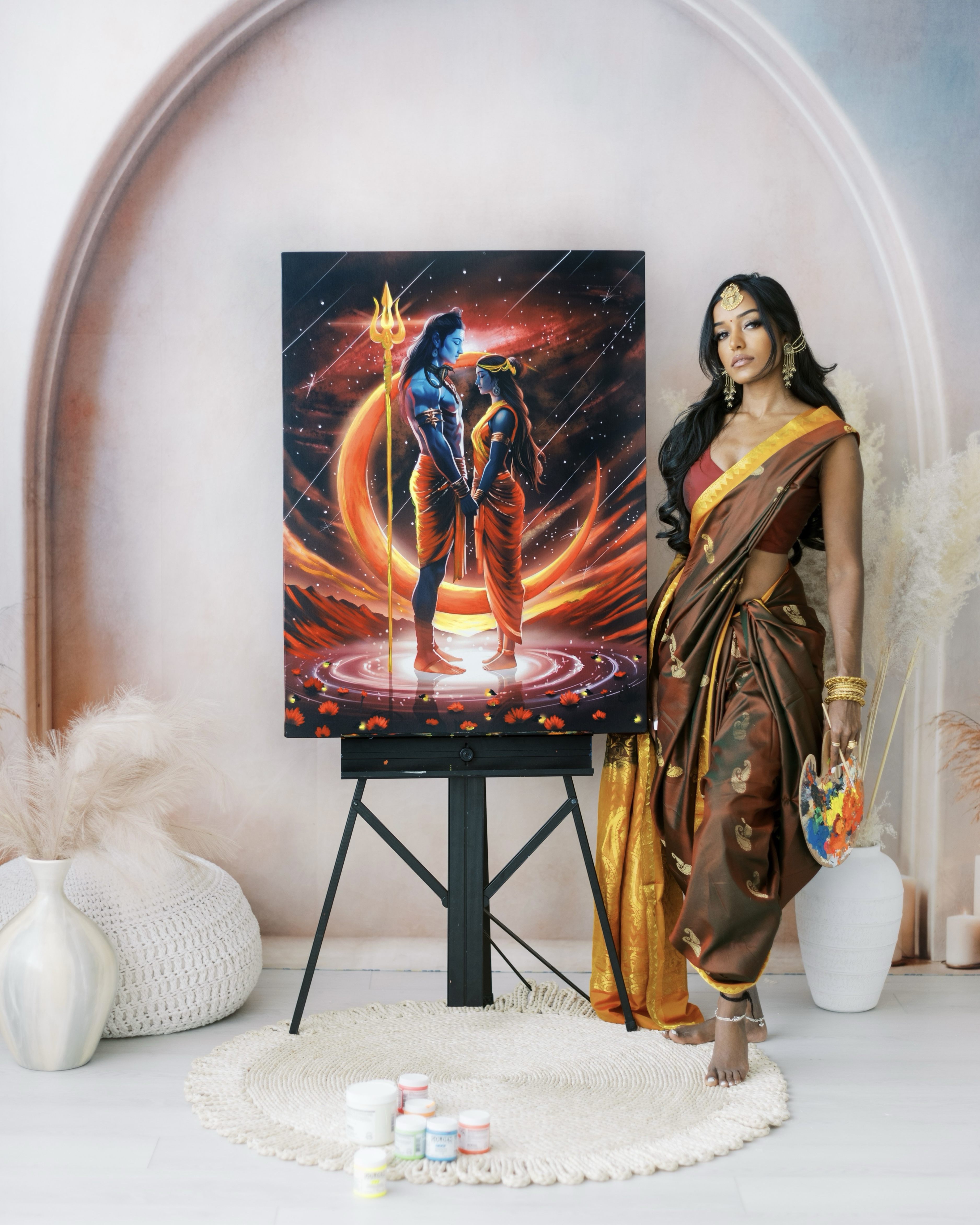
Lately, I’ve shifted from mostly anime-inspired work to more cultural pieces, like paintings of Hindu gods. For example, I’ve done a series of Shiva paintings, and now I’ll re-purpose those into posts like, “Here are four different versions — which one’s your favorite?”
Learning how to recycle old work and still keep it engaging has helped. But finding that balance between creating and keeping up with content is definitely something people don’t always see behind the scenes.
In a world driven by likes, views, and short attention spans, is it truly possible to stay authentic to your creative voice—both online and offline?
Definitely — but it’s all about balance. After I post in the morning, I usually spend the first hour replying to comments, since that early engagement really boosts visibility. That’s just how the algorithm works. But after that, I shift gears and focus on painting or catching up on brand work.
As a creator, if you don’t learn to set those boundaries, Instagram ends up using you, instead of the other way around. I try to stay intentional about how I show up online while still protecting space for my creativity offline.
Has your art changed because of Instagram? You mentioned shifting from anime to cultural work like paintings of Hindu gods. Was that a conscious decision or something you naturally grew into?
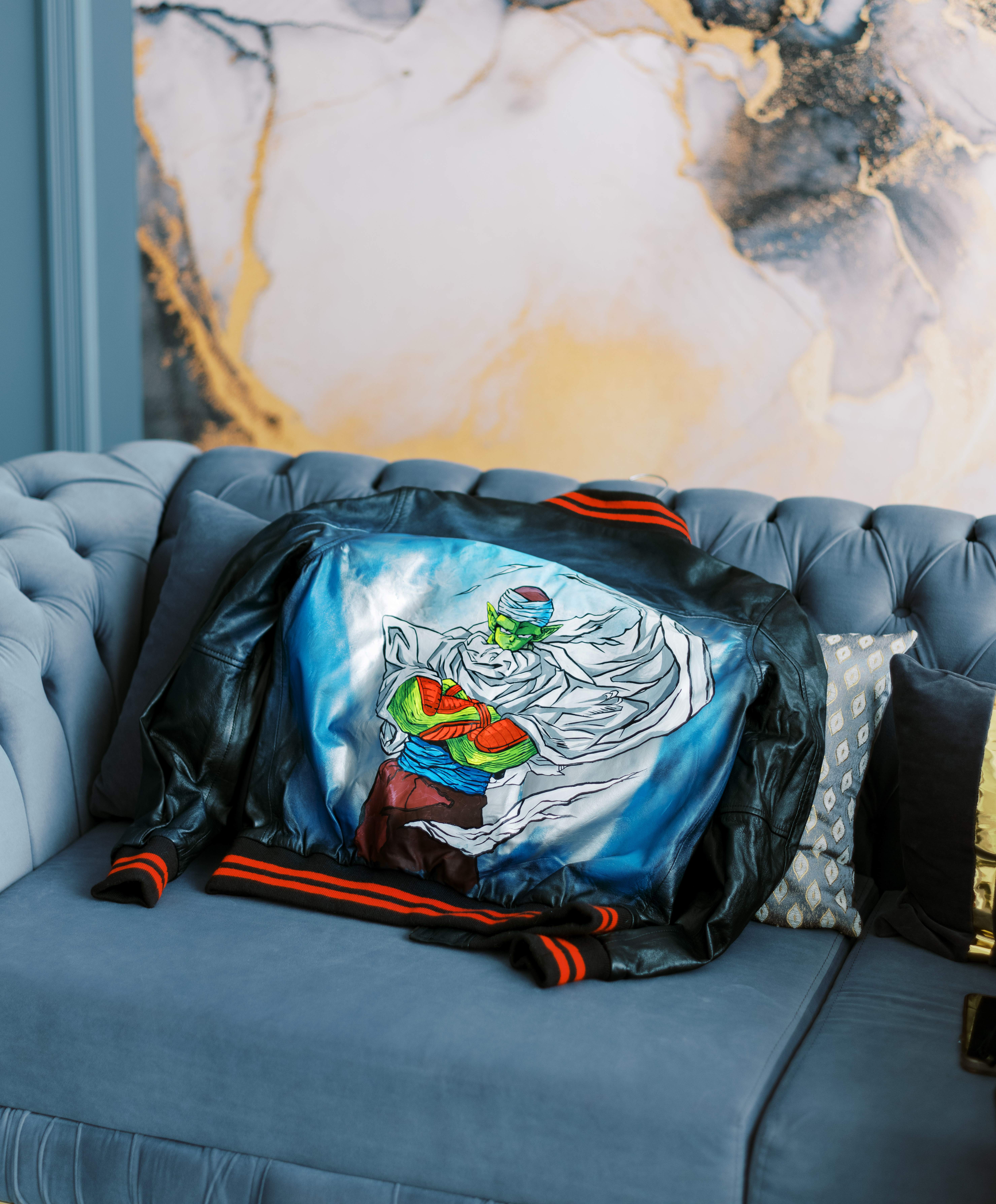
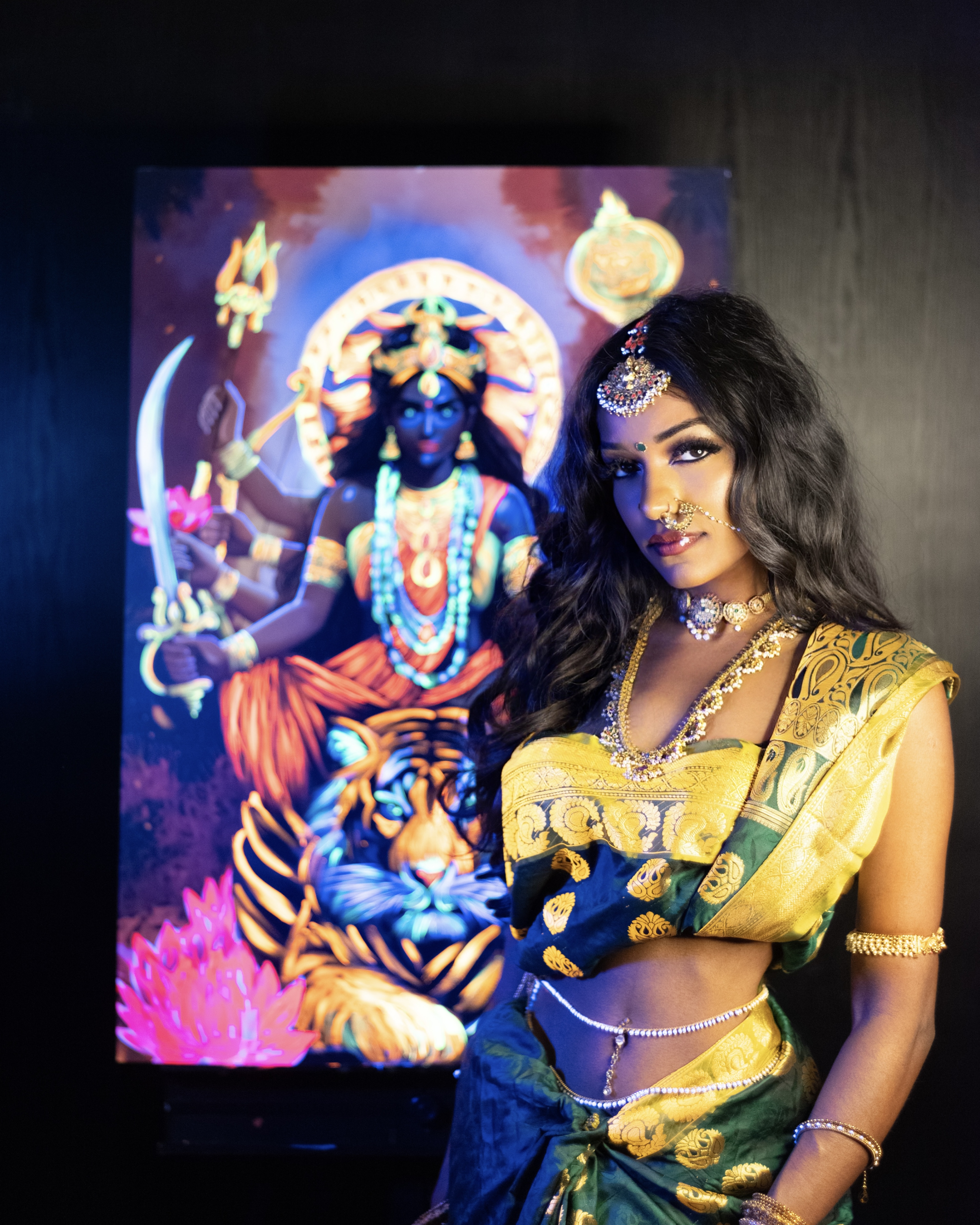
It was definitely intentional. Anime was fun, but it comes with a lot of copyright issues, and I wanted to move toward something that felt more personal. That’s when I started exploring cultural themes and painting Hindu deities — it just felt more aligned with who I am and what I want to share.
At the same time, I realized that when you lean into what you genuinely love creating, you naturally attract people who resonate with that. Finding your niche isn’t about chasing trends — it’s about staying true to what fuels you creatively. If you don’t, the whole process just ends up feeling exhausting.

Do you think you would’ve achieved the same level of success if you were building this career from a place like Colombo? Why or why not?
Honestly, probably not. I moved here when I was 13, and one of the biggest differences is just access — to technology, platforms, and creative communities. Around 90% of my art career has happened online, mostly through Instagram. In Colombo, I don’t think I would’ve been nearly as motivated or even aware that art could become a full-time online career.
The environment here played such a big role. I went to university here, studied math — and hated it. I ended up dropping out. Art had always been my escape, especially during that transition when I left everything and everyone back home. It helped me process all of it.
If I’d stayed in Sri Lanka, I think art would’ve remained a hobby. But here, it became my lifeline — and eventually, my career. So no, I don’t think I would’ve taken it this seriously if I had stayed. The circumstances here pushed me to turn my passion into something bigger.
How has the feedback to your art been from people back home?
It's been amazing! Especially when I did my Jaffna Series — I made it a point to visit places even my mom or grandma had never been to. I explored corners of Jaffna that are still so rich in culture but don’t always get attention. Through those pieces, I really wanted to highlight the beauty and depth of our culture — not just for the Tamil diaspora, but for anyone who sees the work.
People from back home have been so supportive. When I paint local people or scenes from these villages, I get messages like, “Oh wow, I worked there!” or “That’s my hometown!” It’s the kind of recognition that means a lot — like art becoming a way to reconnect with their roots. Being there, immersed in the culture while creating, made me feel incredibly grounded and grateful.
When I went back to visit my old school — Saiva Mangayar Kazhagam - Hindu Ladies College in Colombo — I got to reconnect with my Grade 8 art teacher. Art was just one subject back then, not something I ever thought would become a career. I showed her my Instagram and the work I do now, and she was genuinely shocked — like, “Wait, you can actually make money from this?”
It was such a foreign concept for them — the idea that you can be a full-time artist and entrepreneur. So while I was in Sri Lanka, I ran 7 or 8 workshops across the country, including at Dream Space Academy, my old school in Colombo, and a few in Jaffna. Beyond teaching them how to paint, I focused on showing them how to build something with their art — how to turn creativity into a livelihood. That part meant the most to me. It felt like I was giving back in a meaningful way.
What’s been your most important lesson in turning your art into a sustainable business?
I’ve learned so much — from copyright issues to the importance of contracts. Having a proper contract in place when working with clients, collaborators, or even other artists is something I didn’t fully understand at first. Since I never went to school for business or art management, I had to figure it all out on my own over the past 10 years.
Everything from social media to marketing, pricing, and project management — it’s all been self-taught. And while that was empowering, it was also overwhelming at times. The biggest lesson? That I can’t do everything by myself.
It took me a while to accept that, but now I’ve hired a few people to help me. Letting others handle what they’re good at — whether it’s admin, content editing, or logistics — has given me the freedom to focus on what I love most: painting and creating.
Building a sustainable art business means knowing when to ask for help, and realizing that it’s okay to grow as a team, not just as an individual.
You bought your first home at 23 through income from your art and social media. How do you plan for long-term goals like that in a space that feels so trend-driven and unpredictable?
It’s definitely unpredictable, but not impossible — it just takes strategy. When I first started selling my art, I priced my pieces at around $100–$300. As demand grew, I gradually increased my prices — like $500 more each time — based on how much interest there was in my work.
At the same time, I reinvested every bit of profit back into my business. Whether that was improving my materials, upgrading my website, or planning better product drops — I made sure the money kept circulating back into what I was building. That’s how I was eventually able to save up for big milestones, like buying a home.
I also journal a lot — I write down my goals, break them down into steps, and list the pros and cons of each path. That helps me stay focused when everything around me feels super fast-paced.
As an artist, you also have to diversify. I don’t just sell original paintings — I sell prints, posters, calendars, and I'm currently working on launching merchandise. There are so many ways to turn your art into products: clothing, accessories, home decor — you just have to explore what fits your brand and vision.
Success doesn’t come from going viral once — it’s about building multiple streams, setting clear goals, and making smart, long-term moves behind the scenes.
What are three key insights you'd share with someone looking to turn their passion into a business through social media?
The biggest thing is just to keep posting your work, even if you feel like it’s not perfect or good enough. I’ve been there — I remember looking back at art I shared 10 years ago and totally cringing. But what seems ‘meh’ to you might actually inspire someone else or really connect with them. You never know who’s out there watching and getting inspired just by you sharing your journey.
Also, you’re definitely going to get haters or people who don’t get it. That’s just part of putting yourself out there. Some folks might mock or doubt your work, but you can’t let that stop you. You’ve gotta keep doing your thing no matter what because that noise is normal when you’re building something real.
And lastly, consistency is way more important than perfection. You don’t have to wait for everything to be flawless to post or share. Just keep showing up, keep creating, and keep sharing what you love. Over time, people will start to notice you and connect with your story — that’s how you turn your passion into something sustainable.
You have over 250,000 followers, but art is often a pretty solitary process. Does the journey ever feel lonely? How do you handle that side of it?
Honestly, one of the best things I’ve learned is how to be comfortable with myself. I know a lot of people aren’t used to being alone or dealing with their own thoughts, but art really helped me get there. Does it ever get lonely? Yeah, sometimes—mostly when I’m traveling and away from my family. When I’m home, though, it’s different. My grandma’s usually around, telling me stories about back home and her younger days, so I’m never really alone. Those moments keep me grounded and connected.
But when I’m in a hotel room by myself, waiting for my next gig, I do feel a bit lonely. That’s when I FaceTime my mom or chat with family to stay connected. I’m really close with them, so that helps a lot. Being able to create art at home in Toronto, with that freedom and family support, makes the loneliness pretty rare for me.
Do you think every artist or creator needs to be on social media?
No—they don’t have to be. Some artists work really well with galleries or other spaces outside of social media. But social media is definitely a powerful tool right now. If you have the chance to use it, why not take advantage? Especially on platforms that are still growing, getting in early can really help you blow up fast. The key is being consistent with your posts. So if you’re not on it yet, I’d say it’s worth giving it a shot—it’s just another way to get your art out there.
Can you imagine a future where you leave social media completely—or maybe switch to practicing art in a totally different way?
Maybe. Yeah, I’ve thought about it. A few galleries have even reached out to work with me. But Instagram is more than just a way to make money—it’s a way I express and share my art. It’s really important to me because I connect with so many people through it. A lot of folks message me saying I inspired them or motivated them to start their own art journey. So, for me, social media isn’t just about promotion—it’s about reaching people and sharing my passion. That makes it pretty important.