Sixteen years ago, when the guns fell silent on May 18, 2009, I woke up in Hotel Saskatchewan in Regina on that Monday. It was the beginning of a week-long business trip, but I was mentally and physically exhausted. I was frozen with nightmares, anger and snuffed-out dreams of our own nation. I had no desire to meet with anyone; I just wanted to stay in the room and not talk to anyone. I wanted to crawl back into bed and wake up to a different kind of dawn. A dawn of freedom for my people. The unthinkable had happened. I found it extremely difficult to stay optimistic and upbeat.
With the defeat of the Tamil Tigers—the decades-long conflict came to a bloody end in the Sri Lankan breadbasket region of Vānni, nestled between fertile land and brilliant blue Indian Ocean in the besieged and blood-soaked village of Muḷḷivāykkāl, where the rain of death from Sri Lankan shells, mortars, and machine guns killed scores of Tamils. Thousands of the dead were children, and most of them died before they even knew that they were Tamils. Many died in bunkers or were burned alive or bombed in open spaces.
I had to force myself to get ready and meet my direct report and a few clients in the lobby of the hotel for breakfast. I got ready and waited for the elevator. In the hallway next to the elevator bank, I saw a stack of newspapers. The headline read “Sri Lankan Civil War: Tamil Tigers Are Defeated by the Sri Lankan Government, Ending Almost 26 Years of War.” The war ended but the suffering of Tamils continued. This prompted me to write a third and final op-ed on the matter. On July 17, 2009, the National Post published my final column called “The Silent Suffering of Sri Lanka’s Tamils.”
I was absolutely devastated by seeing the unconscionable and horrible footage that was coming from Sri Lanka. Even the vast land of prairie clouds seemed morose, reflecting my mood. But it wasn’t sadness that threatened to burst out of me. I was angry, and I got angrier by the minute, on that day. I was agitated by my own individual thoughts and nightmares. I wanted revenge.
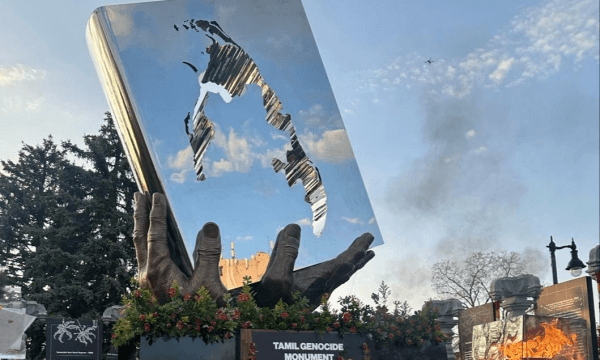
Our emotional wounds do not heal, but they fester. Sixteen years later Tamils are still grieving-stricken with rawness at our fingertips. Sometimes dunes of emotion dominate our psyche, as we often oscillate between howling sadness and stunned silence. This kind of cleavage of emotions has become increasingly apparent in Diaspora circles. We have seen enough of other people’s nightmares to know that whatever they have been through has left a deep mark. Grief is oceanic—deep and imponderable.
Sometimes, when I turn the pages of my own book, I’m well reminded that many of us Tamils left a part of ourselves in Sri Lanka—a nation of blood and tears. However, as accurately as I can recall the horrible events in the book, it is just a book. Horror can be contained within a book—given form and meaning. But in life, horror has no more form than it does meaning. It just is. Life piled on life, but every life saved is saved from that eternal silence.
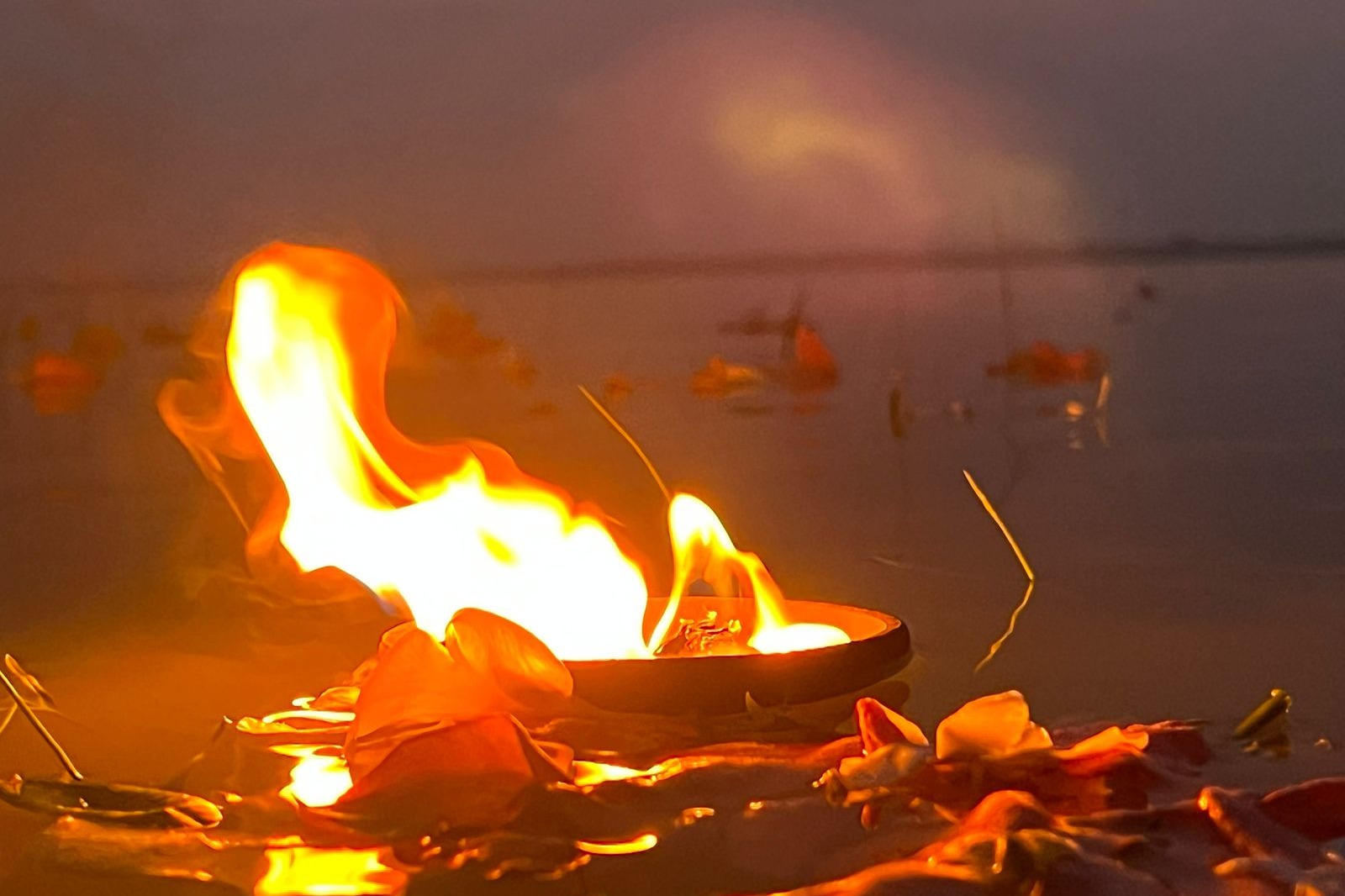
The world consoles itself by talking of common human feelings, but as Tamils found out in May 2009, there are times in history when there is no such thing. For Tamils, history is not an abstract subject. Rather, it is a living flame from which Tamils continue to draw sustenance and strength. In this light, the month of the infamy, 'May Massacre,' will never be a mere historical footnote for Tamils in the book of unimaginable suffering. Our memory is the only true justice. It’s our only defense against the repeating misery of our history.
It centers around the ghastly crimes, set within the context of the Tamil nation eviscerated by thugs in uniform. This and many other monstrous barbarities against Sri Lankan Tamils still resonate within the hearts of most Tamils, including my own. An era may have ended in May 2009. But the significance of the freedom struggle—and the many thousands of lives sacrificed for this legitimate cause—will never be forgotten.
This is a moment for Tamils to soberly reflect on how we value life and what meaning we attach to death. This moment is ripe for celebration, a celebration of the lives of innocent people killed in May 2009 and those who were caught in the crossfire of the decades-old war on Tamils in Sri Lanka. Certainly, we each have our own memories of those we have lost. Some are personal, subtle moments between two individuals; some are the stories we all share that unite us in our grief and make us smile fondly even during overwhelming loss.
It is important to replace numbers with names. Failing to do so is like a deafening silence—the silence of a murdered generation, including thousands of innocent Tamil children. Each victim had a name, felt love, was loved, laughed, cried, was scared and ultimately slaughtered by the evil hordes with deep-seated ethnic hatred.
The reality is, the world is full of birth and death, tragedy and triumph. It is this “irrefutable truth” that runs like a tragic thread that binds humanity in unison, regardless of colour, culture and country. We Tamils have seen enough deaths to understand the value of life. It is important not to replicate the cycle of violence that has already crippled Sri Lanka. The war turned the innocent people into numbers. It is for us Tamils in the West to turn the numbers back into names. If we cannot do that, then the tyrants have shaped not only their view of the world, but their humanity.
For me, an era may have ended in May 2009, but the significance of the freedom struggle—and the many thousand lives lost, including my father—will never be forgotten. Statistics, it has been said, are human stories with the tears washed off. In that sense, I am left only with the memories of the unjust death of family members and friends. But somewhere in this mangled memory will always be the life it represents, like an echo I no longer hear but swear I will never forget. They are the true faces of this sad epoch in history.
We are from a teardrop-shaped island, and countless are the tears that we shed. The dead will never cease to cry out. Nor, on their behalf, should we cease to do so. If any good were to come from this ugly chapter in the cursed history of Tamils, it would be an effervescent celebration of the notion that anti-Tamil, perfidious policies will never ultimately triumph over the indomitable spirit of the Tamil people. Tamils should celebrate this interminable triumph amid this tragedy. Many Tamils like me are living this today. The Tamil diaspora has an important role to play in making sure we remember.
Our devastation has been replaced by wonder at life’s mystery, and a profound surprise in the human spirit and its resilience. We now know that we are able to fall to the depths of sorrow yet rise again with time. Now, as ‘hyphenated citizens’, allowing ourselves to live this journey in our own way––to experience the lows, the tears and the heartbreak––eventually brought us back to a new beginning.
The resilience of humanity serves as a wonderful workshop in which the images of the deceased are imposed onto the canvas of life, shaped by the living. Revenge solves nothing. But if we set forth upon a path for revenge, then we dig two graves: one for our enemy and one for ourselves. Perhaps we can look within our own hearts, and ensure our words and actions always contribute to a better world for us all.
On this Remembrance Day, our search for justice, inner peace and closure, born out of tragedy, has probably risen once again. To kill the innocent on such a vast scale was horrifying; to deny the horror is simply inhuman. We know the kind of people who deny the Holocaust. What interest anyone has in denying the suffering of Tamils and prevaricates remains to be discovered. The dead deserve to be heard, as the pendulum of brutality has clearly moved against them. We hope the world won’t wait until the Museum for Human Rights curates a history of the persecution of those who are left behind to tell their story.
While the residual scar on our psyche still lingers, the pieces of our heart that were so broken and dismembered sixteen years ago seem to be finding their way back together. The bitter narrative of oppression and grievance is over for the dead. To them, with the young and the living, the narrative of possibility––through the next generation––can begin again. No evil can withstand the strength of people whose time has come.
We’re here. We’re alive. We remember.
They can rest now.