In Sri Lanka's North and East—regions marked by decades of war, displacement, and militarization; queer lives are often lived at the margins of both visibility and protection. While the national conversation around LGBTIQA+ rights has grown louder in recent years, policy reforms remain stalled, and the oppressive colonial-era laws particularly Sections 365 and 365A of the Penal Code, which criminalise same-sex relations continue to cast long shadows.
For queer folk in the North and East, these challenges are compounded by ethno-political marginalization, cultural conservatism, and a lack of access to community spaces and support networks. In this landscape, grassroots activism and creative resistance have emerged as vital tools for survival and self-expression.
One such force is Kasro Ponnuthurai, a Jaffna-based queer writer, veterinary surgeon, and cultural organiser. Through the Jaffna Queer Festival (JQF) a groundbreaking arts and cultural platform launched in 2021, Kasro has created space not only for queer visibility but also for critical dialogue around militarism, caste, and ecological justice. Their work is a testament to the power of localised, intersectional activism that bridges art, identity, and politics in a deeply divided society.
In this conversation, Kasro speaks candidly about their journey, the urgent need for decentralised queer advocacy, and why pride in Jaffna is not just a celebration but a political act of reclamation and resistance.
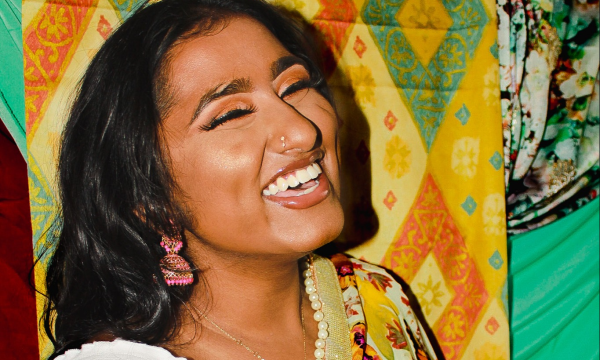
Can you briefly describe your journey/experience being a Tamil queer person?
My name is Kasro Ponnuthurai. I am a Queer writer and a Veterinary surgeon, as well as the founder and director of the Jaffna Queer Festival (JQF), an interdisciplinary arts and culture festival established in 2021. JQF is informed by queerness as both a method and a way of knowing.
Upon entering the queer activism space to advocate for LGBTQIA+ rights in Sri Lanka, I recognized a centralization of efforts in the capital, Colombo. In response, I aimed to decentralize queer advocacy and create a space specifically for Tamil-speaking ethnic minorities.
As a queer individual, my work extends beyond advocating for LGBTQIA+ rights to addressing various social issues, including the plight of forcefully disappeared persons, military occupation in the northeastern regions of Sri Lanka, caste discrimination, and environmental conservation. Furthermore, I am actively engaged in efforts to decriminalise homosexuality in Sri Lanka and advocate for the reform of sections 365 and 365A of the Sri Lankan Penal Code.
How have you used art/creativity as a way to express your identity and break barriers?
My childhood years were marked by the last decade of war in Sri Lanka. It was an intense period where any sort of self-expression – cultural or otherwise – was actively discouraged. On top of everyday violence unleashed onto the population, we lost several thinkers, writers, poets, and academics during those years. As a gay teenager and an aspiring poet, I became acutely aware of the narrowed and constrained spaces we have for cultural expression in the Tamil speaking north. Everything I learnt about myself, I learnt through resources at a distance. In the immediate vicinity of where I was physically located, the cultural resources were scarce, ifaltogether non-existent.
During my A/Levels, I decided to seek out community that is intentional about wanting to do something local to the region. Along with a few friends in the region, I started to address unmet frontline needs of Tamil speaking LGBTQIA+ persons in the area and beyond. My involvement was mainly around coordinating cultural programmes and activities.
In the past years through cultural programming, I was able to introduce writers and artists to the local LGBTQIA+ community. Through such encounters, we eventually began to receive and identify locally emerging talents in the arts and literature.
I was also involved in liaising with annual LGBTQIA+ pride events and walks organised in Colombo and Jaffna. I worked to ensure and coordinate active and meaningful participation of Tamil-speaking voices at these events.
In both capacities, I was observing myself moving through networks of cultural production and dissemination. These networks, powerful and productive as they may be, were unconnected to the region where I am from. At times, this was an alienating experience. I wanted to see what could be done to bridge a gap in networked cultural production.
I looked to Tamil-speaking queer cultural production elsewhere in the South Asian region. I was able to find concrete examples of innovation in Chennai but none in Sri Lanka. This realisation made me think about ways to build networks at a global scale, but geared towards instituting something at the local level.
During the Covid-19 period, almost every aspect of our LGBTQIA+ organising work was moved online. This broadened the scope of discussions we were having already in closed, local networks. The online nature of conversations paved the way for truly diverse, and international participation.
Working in a cultural coordination role has helped me secure a wider community network of people, talents, skill sets, and resources interested and invested in widening Tamil-speaking cultural spaces for queer life, expression, and creativity. Coming from a place of really narrow spaces for expression and exchange, I consider this as a major personal achievement. Realising that these networks could be geared towards developing something in the local region, I started having conversations with a few key individuals in early 2021.
I proposed the development of a regional festival in collaboration with my long-term friend and cultural partner, Hari Rajaledchumy. I established myself at a steering role as founder director while she assumed responsibility as a festival curator. Together, we invited our networked resources in the region to consult us on processes and feasibilities. Having worked in the local area as an LGBTQIA+ organiser, I was able to identify and reach out to a few key commercial partners who were willing to support us. We partnered up with progressive business enterprises in the region.
From the start, we were careful not to be reduced into a ‘community’ bubble. The festival is open to everybody. It is where culture meets a particular type of approach. We wanted the work queerness to mean all that it could mean. An expansive catchment meant a wider reach into communities of writing, visual arts, cinema, intellectual conversations and more. The 10-day annual festival includes visual arts commissions, artist and curator guided tours, film screenings, artist performances and discussions, field visits, parties, and night life.
We have successfully hosted three editions of the festival over the past years, each with distinct themes: Arrival and Announcement, Queer Ecology, and Animal Behavior.
And what can the community do more in terms of embracing queer individuals?
In recent years, Tamil-speaking societies have shown increased social acceptance and a basic understanding of queer individuals. However, there is still significant progress to be made. It is crucial for parents and educators to raise awareness about LGBTQIA+ rights among children. Children should be taught to respect all individuals, regardless of their gender or sexual orientation. Every person has the right to live in society with equal dignity and rights.
Could you also elaborate on the existence and significance of pride in Jaffna according to you?
The Pride Walk is not merely a space for celebration; it is also a form of protest. In Tamil, we refer to it as ‘Suyamariyathai Nadai,’ which translates directly to ‘Self-Respect Walk.’ As an individual who has been actively involved in organising pride walks in Jaffna, I view it as a platform to voice opposition against various forms of discrimination, including racism, religious extremism, militarization, forced disappearances of political minorities, and casteism. Additionally, it serves as a political space for expressing our identities, fostering social coexistence, and promoting inclusivity.