For decades, Tamil cinema has asked audiences to believe in heroes who are fearless, morally righteous, and almost impossibly perfect. These heroes defeat villains, protect the vulnerable, and win love with unwavering loyalty. But what happens when the man behind the hero becomes the subject of rumours?
When speculation involving Vijay and Trisha Krishnan began circulating online — alongside reports about changes in Vijay’s long marriage — the internet reacted instantly. Fans debated. Screenshots circulated. Comment sections exploded.
Part of the reaction intensified after photos surfaced of Vijay and Trisha attending the same wedding celebration. Within hours, the images spread across social media, prompting fans to analyze everything from brief interactions to seating arrangements.
In the age of the internet, even a single photo can ignite an entire narrative. Yet beyond the speculation lies a deeper cultural question: why do the personal lives of Tamil cinema stars feel so personal to us?
Because the conversation surrounding Vijay and Trisha is not just about celebrity gossip. It reflects how fame, nostalgia, fan culture, gender expectations, and even politics intersect in Tamil society.
In most film industries, actors are celebrities. In Tamil cinema, they often become something larger. Fans build towering cutouts, pour milk over posters during film releases, and defend their favourite stars with remarkable loyalty. The relationship between star and audience extends far beyond entertainment. Historically, Tamil cinema has blurred the line between screen persona and real-life leadership. Icons like M. G. Ramachandran and J. Jayalalithaa successfully transitioned from cinema into political power, their film personas reinforcing their public image as leaders. Today, Vijay stands at a similar crossroads. With the launch of his political party, Tamilaga Vettri Kazhagam, he is increasingly viewed not just as a film star but as a public figure whose personal life may face greater scrutiny.
Which raises a difficult question: do audiences expect more from actors once they enter politics?
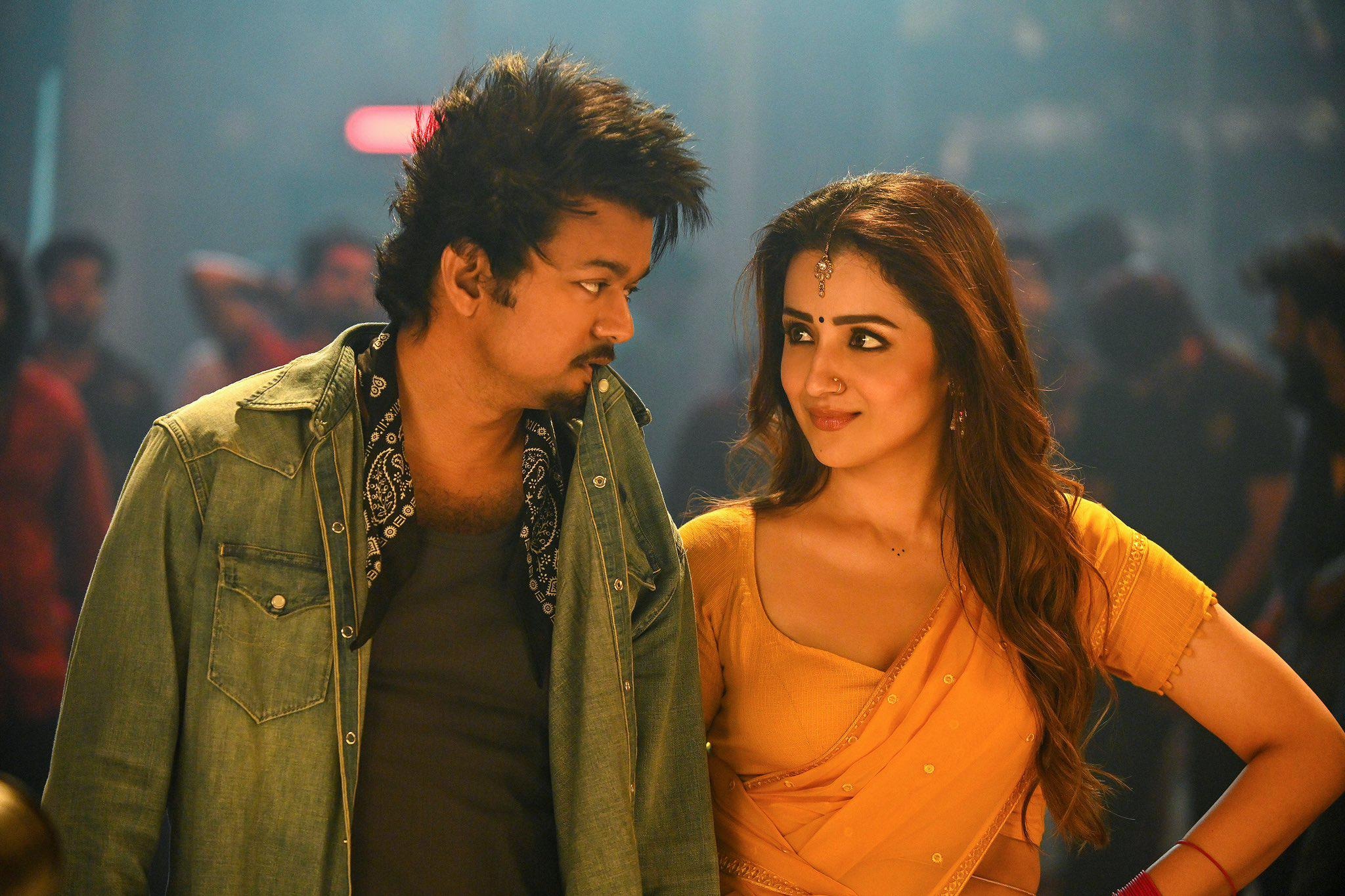
Part of the fascination surrounding Vijay and Trisha stems from nostalgia. For many Tamil moviegoers, the pair represent a defining era of cinema. Films like Ghilli, Thirupaachi, and more recently Leo helped cement their place in popular culture. When familiar on-screen pairs reunite years later, curiosity is almost inevitable. Nostalgia has a powerful way of amplifying attention.
Another moment fans revisited during the recent discussions comes from Leo, directed by Lokesh Kanagaraj. Tamil cinema has traditionally been conservative about physical intimacy on screen. While romance is central to many films, explicit displays of affection — particularly kissing — have historically been rare in mainstream Tamil cinema. Yet in Leo, Vijay and Trisha share a kiss on screen, a moment that stood out to audiences when the film was released. At the time, it was widely interpreted as a sign of evolving storytelling in Indian cinema. But once rumours about the actors began circulating online, some viewers revisited the scene with new curiosity. What was originally just a cinematic moment became something audiences began interpreting through a different lens.
Another question quietly emerging in these conversations is whether speculation like this changes fan loyalty. Will fans stay loyal?
Tamil cinema has long been known for extraordinarily devoted fan bases. Fans often separate an actor’s personal life from the work they admire on screen. Will fans continue to see Vijay primarily as the cinematic hero they grew up with? Or will the overlap between celebrity, politics, and personal life reshape how audiences view their stars? The answer may reveal how much Tamil fandom itself is changing.
Celebrity conversations also often reveal unequal expectations for men and women. Despite more than two decades of successful films, discussions about Trisha can quickly move away from her work and toward speculation about her personal life. This dynamic is not unique to Tamil cinema — but it remains a persistent pattern.
Trisha made a statement on X a few days after the event. “I was informed by organizers of a recent event that my name and picture were included at the last-minute event at the request of an individual conveyed through his assistant. A microphone doesn’t make a comment intelligent or humorous. It just makes stupidity louder. Crude words without knowledge say more about the speaker than the person they’re aimed at,” she said.
Similarly, Vijay acknowledged at a women’s day event that took place in Chennai, Mamallapuram, that he sees how his fans were feeling hurt after recent events.“I see all of you busy fighting those allegations and getting hurt. In fact, I get hurt seeing that you get hurt. I will take care of all that. Let's get involved in people's problems. Don't get hurt about that problem - it's not worth bothering about. Be confident. Only good things will happen,” he said. The responses from Trisha and Vijay reflect attempts to redirect the conversation—Trisha by calling out the casual normalization of disrespectful commentary, and Vijay by urging his supporters not to dwell on negativity.
Yet the public reaction surrounding the incident underscores a broader cultural pattern: women in the spotlight often face scrutiny that goes beyond the original remark, while controversies involving male actors tend to be discussed in terms of career impact, public relations, or fan loyalty.
At the heart of the conversation lies a deeper cultural reality. Tamil cinema has long portrayed heroes as moral ideals — protectors, loyal partners, and champions of justice. Over time, these characters can merge with the identities of the actors who portray them.
Fans begin to see not just the performer, but the hero.
But real life rarely follows a movie script.
Actors are individuals navigating complex lives and relationships like anyone else. When rumours emerge, it forces audiences to confront the gap between the characters they admire and the people who portray them.
Because heroes may live on screen. But the people who play them live in the same complicated reality as everyone else.