Introduction to the The Indian Dance Circuits and the Tamil Question (Part 1)
Margib & Dr. Srimix
Introduction to the The Indian Dance Circuits and the Tamil Question
Hundreds of people packed into sold-out auditoriums across major American cities and college towns. Colorful costumes that reflected the vibrant hues reflected in Indian films. Chest-thumping music and remixes pulsating through the venue. Calendars marked months in advance by not just the competitors, but by tens of thousands of folks looking forward to connecting with their people. This is a snippet of what the competitive Indian dance scenes in the United States looked like in the 2000s and early 2010s.
What it didn’t include in its early days was Tamil (or any other South Indian language) music. To understand how this played out, and how this changed, it’s important to set the context of the Indian-American dance experience, and how the Tamil-Indian-American experience differs heavily from that of the Tamil diaspora in Europe or Canada.
The broader Indian-American social space was shaped heavily by North Indian immigration patterns — Punjabi, Gujarati, Hindi-speaking communities — and by a Bollywood-dominant social culture .Margib notes that “As a Tamil but with Hindi-speaking parents, Tamil culture in my household was mostly relegated to Tamil Sangam events and festivals, but in the outside would being Indian meant Bollywood and speaking Hindi with the wider Indian-community.”

Every seat in this auditorium was sold out
Many Tamil kids in America often grew up in two worlds at once. At home, they might be listening to Tamil music and watching Tamil movies. Outside, in parties, college shows, competitions, and desi social life, Bollywood won the tiebreaker. This plays a role in the dance scene, which served as a crucial vehicle for the promotion of and creation of an Indian-American culture.
Collegiate Indian dance teams began popping up in the 1990s as the children of 1960s and 1970s immigrants started coming of age. Indian films and music cassettes served as a cultural tie to the homeland, and as the second generation worked to carve out their own place, they formed dance teams and began performing in various styles, most often Bollywood and Bhangra. What started as campus performances, thanks to the early internet, turned to cultural showcases featuring multiple teams, and soon took a competitive turn.
There was a cambrian explosion of dance teams by the early 2000s and by the mid-2000s Competitions like Best of the Best, Phillyfest, and Dance Fusion had become major events, not just for dancers but for the average Indian-American college student’s social calendar. By the end of the decade the count of Indian dance teams reached the high double-digits, distributed all across the country, with high-stakes competitions, championships, developed rubrics, and more.
By the mid-2000s YouTube emerged as a popular video platform. This served as rocket fuel for the Indian dance community, and people began uploading full performances and competition pieces online. This increased the buzz around the already popular competitions and provided a gateway for younger Indian-American kids to visualize themselves on stage and see what was possible.
Each 6-8 minute performance required a considerable amount of music, and across the teams nationwide, there were 4-600 song and remix segments every year.. Every team was trying to build a unique complete world in a few minutes: Bollywood, Bhangra, hip-hop, classical, and American pop put into filmi emotion, party sections, remix drops, and storyline moments. The variety was supposed to be the point. Many dance competitions were billed as “Bollywood fusion.” Bollywood presupposes the use of the Hindi language. Hindi Film Dance (HFD) love-story sets meant Shah Rukh Khan, Salman Khan, and Hindi hooks, requiring a familiarity with popular Bollywood references.
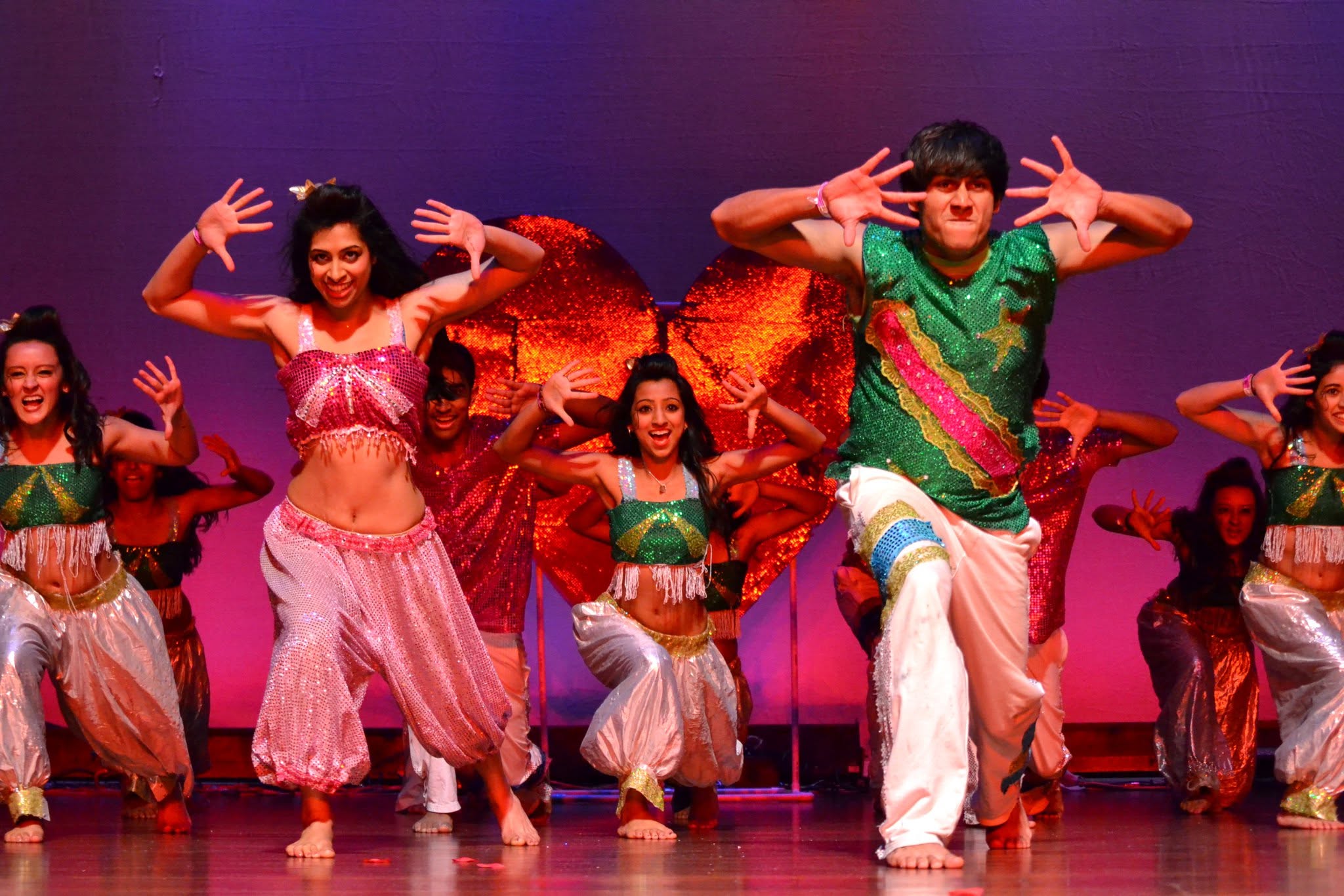
The exclusion was sometimes de facto, but often it was de jure. Bollywood Berkeley, the oldest Bollywood dance competition on the continent, had a rubric rule that mixes needed to be 70% Hindi. Even when Berkeley Azaad swept the circuit in 2010 with a Tamil vs. Punjabi theme, they still chose the Hindi version of “Muqabala” instead of the Tamil one. That choice says a lot about what teams believed the circuit would reward.
Dr. Srimix notes that “this was a contradiction I couldn’t unsee. Even when the audience was heavily South Indian, even when teams had tons of South Indian (or Tamil Eelam) dancers, even when the people on stage had grown up watching Tamil or Telugu movies at home, the music that represented them had effectively never entered the competitive space.”
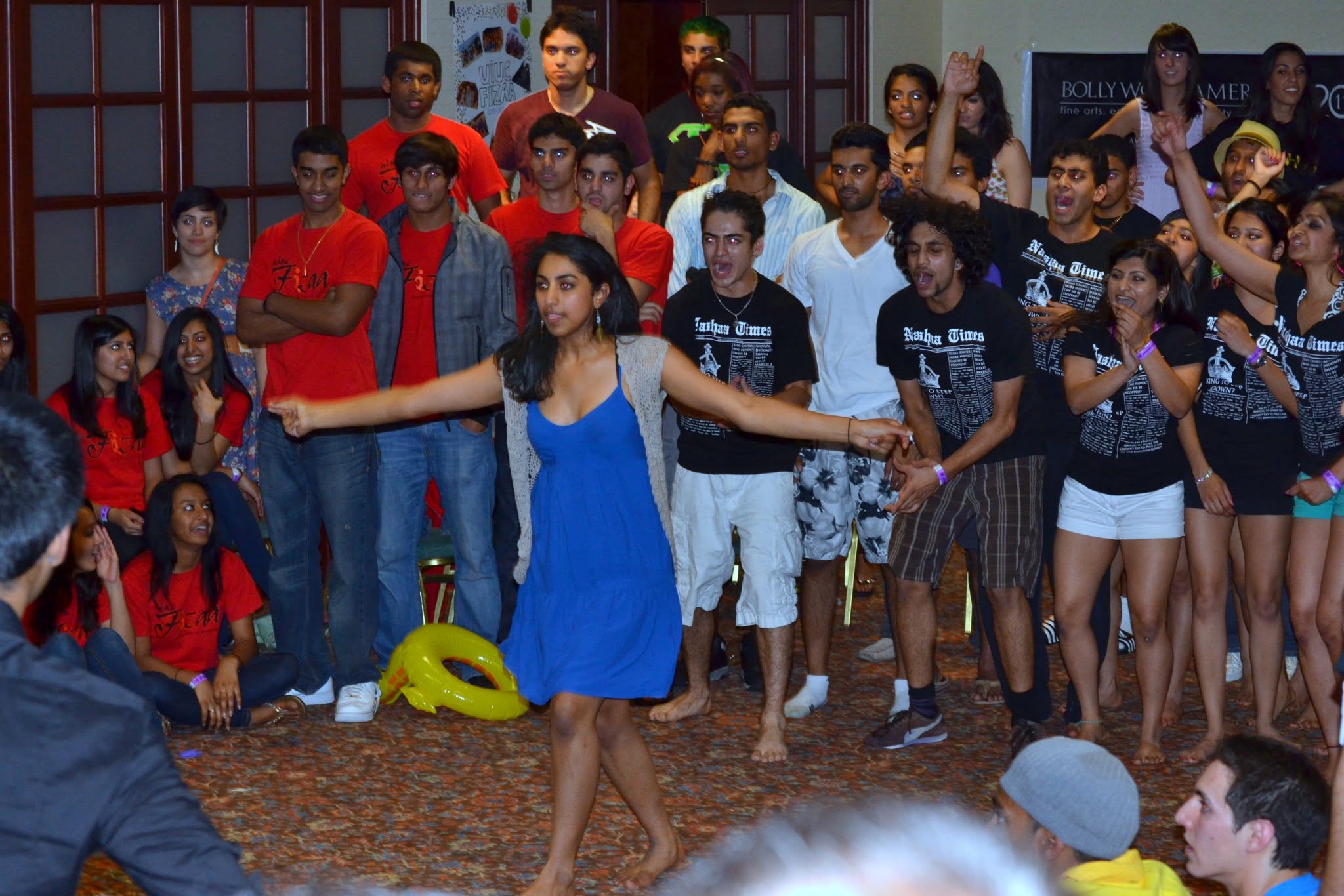
Mixers served as a way for people to mingle across teams
Dr. Srimix goes on to say that” One issue was nomenclature. I noticed it immediately, even before I had any power to change it. In high school, around 2006 and 2007, I watched teams perform and could recognize South Indian people on stage, but not South Indian sound. Co-ed teams, especially on the West Coast, leaned heavily Bollywood. All-boys teams were mostly Bhangra and hip-hop, with some Hindi mixed in. All-girls teams might do classical sections, often Bharatanatyam, but even there South Indian music was used sparingly, sometimes not at all, or replaced by the Hindi versions of songs. South Indian bodies were allowed on stage. South Indian sound was another question.”
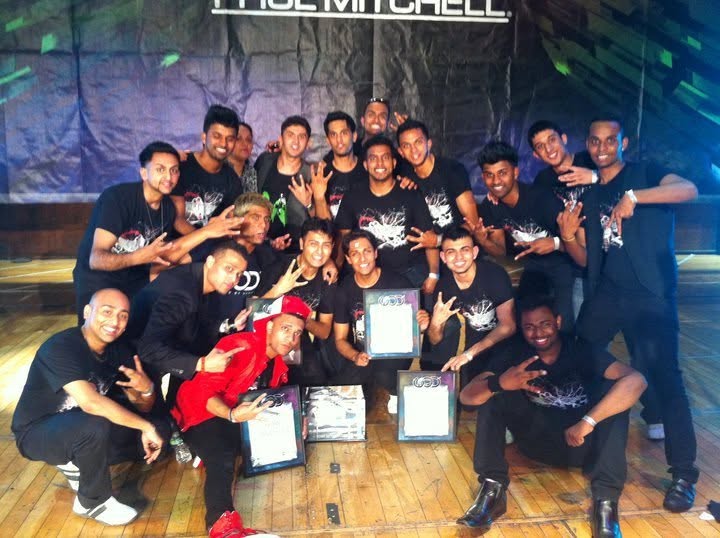
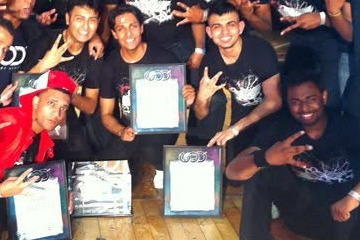
A Team with a large Eelam Tamil contingent
Other times, the exclusion lived in culture. It was the anti-South Indian racism passed down from the parental generation and repeated by 18-to-21-year-olds who did not know any better. South Indian music was called dirty, lewd, too local, too hard to understand, not family-friendly, not hype, not clean enough for the audience. But the double standard was obvious. People could dance to Spanish club music like “Gasolina” without understanding a word, and nobody stopped the party to ask if the lyrics were appropriate. Many North Indian songs had tapori beats, slang, innuendo, and roughness that got a pass. South Indian music, often with lyrics that were no more inappropriate and sometimes far less, was tagged as foreign or unfit. What cultures were normalized sent a clear message and that message was that Indian music not in Hindi or Punjabi was abnormal.
By the mid-2010s this changed, but not by accident. It took major will and effort, but that’s a story for a future piece.